What is Marek's Disease?
The short answer: Marek's disease is a highly contagious herpesvirus that causes tumors, nerve damage, and immune suppression in chickens — it's the most common infectious disease of backyard flocks and vaccination at hatch is the most effective prevention tool available.
Marek's disease is a very deadly viral infection that targets chickens, especially younger ones. It’s caused by a herpes virus (not the type that’ll mess up your dating life, but still not something your chickens want to catch). This sneaky one is highly contagious and can spread like wildfire. Think of it as the ultimate party crasher, showing up uninvited and causing chaos. But don’t worry, it’s not zoonotic, so while your flock might be at risk, you won’t be catching this chicken drama yourself!
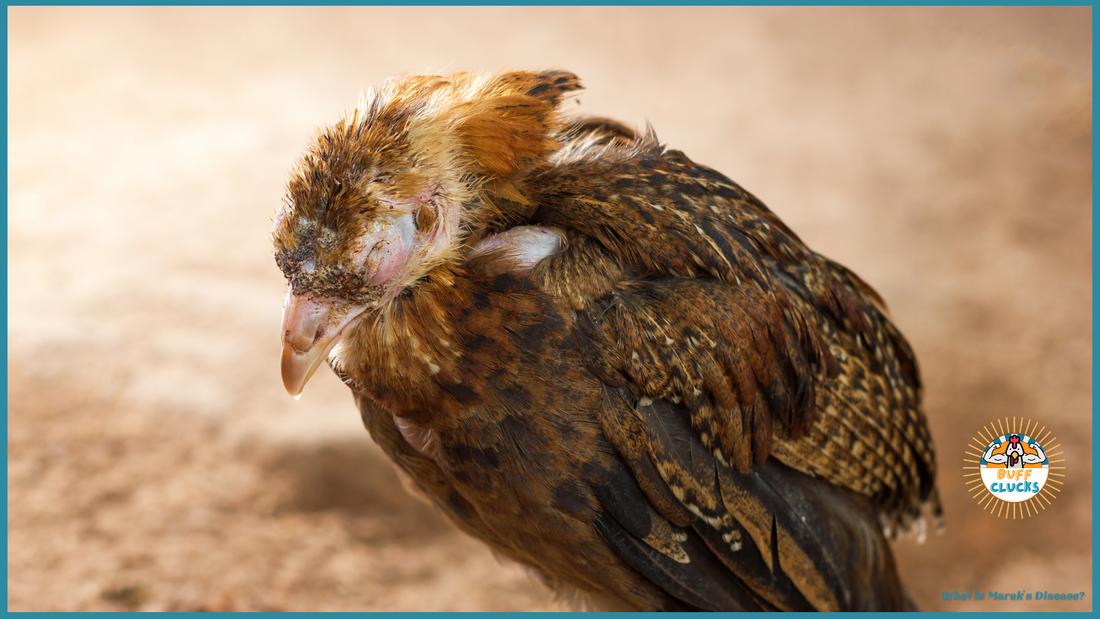
The disease can show up in several forms, each with its own set of problems. The most common is the neural (nerve) form, which causes progressive paralysis. There’s also the ocular (eye) form, where the iris turns grey and becomes irregular, leading to vision loss. The visceral (internal organs) form targets the organs, with tumors popping up in places like the ovary, heart, and lungs, making it one of the trickier versions to spot until it’s too late. Finally, there’s the cutaneous (skin) form, which shows up as enlarged feather follicles, creating lumps that might catch your eye.
But here’s the egg-citing news: With the right care, prevention, and a dash of herbal goodness, you can give your chickens a fighting chance against this nasty virus.

Symptoms of Marek’s Disease
Spotting Marek’s isn’t always easy, as it’s a master of disguise. But here are some common signs to look out for:
Paralysis Caused by Marek’s Disease
If you spot one of your chickens hobbling around, limping, or looking like she’s had one too many fermented berries, Marek’s might be the culprit. This virus attacks the nerves, leading to partial or complete paralysis of the legs, wings, or even the neck, leaving your chicken doing an unfortunate chicken dance.
Weight Loss Symptoms
A chicken that’s shedding pounds faster than a feather in a gusty wind could be battling this disease. When Marek’s hits, it messes with their ability to absorb nutrients, leaving them looking scrawny and feeling less peppy than usual. Adding AquaBoost—Water Supplement for Backyard Chickens to their water can help support their hydration and boost their overall health.
Eye Problems in Chickens
Chickens with Marek’s might end up looking like they’re getting ready for a Halloween party, with eyes that turn cloudy, grey, or have irregular pupils. This “ocular Marek’s” form can eventually lead to blindness, making it tough for your chicken to see the feed bin, or that sneaky rooster trying to steal her snacks.
Tumors as a Sign of Marek’s Disease
Tumors can pop up in the internal organs, skin, or other body parts. While these pesky lumps aren’t always visible from the outside, if you catch any unusual bumps on your chicken, it’s worth a closer look. After all, nobody wants a lump under their feathers unless it’s a fluffy cushion.
Swollen Feather Follicles
Notice some weird, puffy feather follicles on your bird? Marek’s might be making a nest there. This skin form of the disease causes the base of feathers to swell, and if you spot this, it’s a sign your chicken might need some TLC (tender-loving clucks!).
Labored Breathing
If your chicken is struggling to catch her breath or seems to be wheezing like she’s run a marathon (even though she’s just standing there), Marek’s could be affecting her lungs. It’s like trying to breathe through a straw, definitely not the chicken way to live.
Diarrhea
A little chicken with runny poo might have more than just a tummy ache. Diarrhea can be a sign that the virus is wreaking havoc on the digestive system, leaving your chicken feeling crummy.

Prevention is Better Than Poultry Drama!
Just like you’d build a coop to keep the foxes out, you can take steps to keep Marek’s at bay. Here’s how:
Vaccination: The Key to Marek’s Disease Prevention
The most effective way to prevent Marek’s disease is through vaccination. It’s basically giving your chicks superhero capes to protect them against this villain. It's important to note, the vaccine prevents severe symptoms, such as tumors, but vaccinated birds can still carry and spread the virus.
Biosecurity Measures to Reduce the Spread of Marek’s Disease
Keeping your coop secure is like putting up a “No Germs Allowed” sign. Don’t let new birds mingle with your flock until they’ve had a quarantine period.
Keep Marek’s Disease Out of Your Coop by Routine Cleaning
Standard hygiene measures are also essential. Thoroughly clean and disinfect your coop, equipment, and other areas between batches of chicks, using a virus-effective disinfectant. This keeps the environment as healthy as possible for your birds.
Boosting Nutrition to Strengthen Against Marek’s Disease
Ensuring your flock gets a balanced diet and is free from other diseases and parasites is also key. A well-nourished chicken is a strong chicken, and maintaining overall health gives your birds the best defense against Marek’s and other illnesses. Incorporating Herb Supplement For Backyard Chickens into their diet can provide the extra boost they need to stay healthy and strong.

Myths About Marek’s Disease
Marek's disease can be confusing for chicken keepers, and some misconceptions are as common as finding straw in a coop. By busting these myths, you can better understand Marek’s disease and take the right steps to protect your flock. Let’s set the record straight:
Myth: Vaccinated Birds Are Completely Protected
Many believe that once a chicken is vaccinated, it’s immune to Marek’s disease forever. While vaccination is crucial and significantly reduces the severity and spread of the disease, it doesn’t provide complete immunity. Chickens can still get infected; the vaccine simply helps prevent tumors and reduces the risk of death.
Myth: Only Young Chickens Are at Risk
While it’s true that Marek’s disease is most common in chickens under 16 weeks, older chickens are not entirely in the clear. Mature birds can still get infected, especially if they haven’t been vaccinated or if the virus strain is particularly strong.
Myth: Marek’s Disease Can Be Cured
Sadly, there is no cure for Marek’s disease. Once a chicken contracts it, supportive care is the best option. Vaccination and preventive measures are important since treatment options are limited.
Myth: Marek’s Disease Isn’t Contagious
Don’t be fooled, Marek’s is highly contagious! It spreads through dander, feathers, and dust in the coop. Even if a bird doesn’t show symptoms, it can still carry and spread the virus.
Myth: Only Poorly Maintained Coops Are at Risk
While good hygiene and biosecurity can help reduce the risk, even well-maintained coops aren’t immune to Marek’s. The virus can be carried in on wild birds, new flock members, or even on your shoes. Regular cleaning and proper quarantine procedures help minimize the threat, but they don’t eliminate it entirely.
Flap Your Wings with Confidence!
Marek’s disease might sound scary, but with the right precautions, your flock can stay healthy and happy. Vaccinate early, keep your coop clean, and lean into natural remedies like Buff Clucks to boost your flock’s immune system.
So, go forth and conquer Marek’s with your head held high and your flock feathered in confidence. May your coop be forever filled with clucks of contentment and eggs-traordinary health!
Frequently Asked Questions: Marek's Disease in Chickens
What is Marek's disease?
Marek's disease (MD) is a highly contagious alphaherpesvirus that affects domestic chickens worldwide. It causes tumors (lymphomas) in nerves, organs, and skin, resulting in paralysis, weight loss, immune suppression, and death in susceptible birds. The virus spreads through feather dander and is extremely environmentally persistent — infected premises can remain infectious for years without birds present. It's considered the most common infectious disease of backyard poultry.
What are the symptoms of Marek's disease?
Classic Marek's disease presents as progressive leg or wing paralysis — often one leg extending forward and one backward (the "classic split" pose), one wing drooping, or a twisted neck. Affected birds often remain alert and continue eating until late in the disease progression. Other forms cause internal tumors without paralysis. Affected birds are typically 3-30 weeks old when symptoms appear, though some forms occur in older birds.
Can Marek's disease be treated?
There is no cure for Marek's disease. Supportive care (easy access to food and water, separation from flock, anti-inflammatory medication) can maintain quality of life temporarily in mild cases, but progressive paralysis typically leads to humane euthanasia. Prevention through vaccination is the only effective management strategy. Once a bird shows paralysis, the virus has already caused irreversible nerve damage.
Does Marek's disease vaccination work?
Yes — Marek's disease vaccination is highly effective at preventing tumors and paralysis, though it doesn't prevent infection or viral shedding. Vaccinated birds can still carry and spread the virus but typically don't develop disease. Vaccination must be done at hatch (day of age) to be effective before exposure occurs. Most reputable hatcheries vaccinate automatically, but confirm when ordering. Adding unvaccinated birds to a flock where Marek's has been present is high-risk.
Can Marek's disease spread to humans or other animals?
No — Marek's disease is species-specific to chickens and does not infect humans, pets, or other livestock. It is not a food safety concern — the virus does not affect humans through eating chicken meat or eggs. Other poultry species like turkeys and quail can be infected but the disease presents differently and at lower rates. The virus is found in chicken feather dander and can spread long distances on the wind or through contaminated equipment.