The Life Cycle of a Chicken: From Egg to Hen
The short answer: The chicken life cycle — from fertilized egg through chick, pullet, laying hen, and finally senior bird — spans roughly 8-10 years and is governed by predictable biological milestones that every keeper should understand to manage their flock through each stage appropriately.
Every chicken starts somewhere, and believe it or not, that somewhere involves a whole lot of sitting, clucking, and incubating. From the second that egg rolls into existence to the day a fully grown hen starts ruling the roost, chickens have a fascinating life cycle that’s as full of surprises as a hidden nest box. Fluff up your feathers and get ready, because we’re about to break down the life (and sass) of a chicken. Let's crack into it!
Stage 1 — The Fertilization Process
Love is in the air—or at least in the coop! Stage one of the chicken life cycle kicks off with a little rooster romance. The rooster woos the hen with his dashing good looks, sharp attentiveness, and knack for finding the tastiest snacks. (Who knew breadcrumb-hunting skills were so attractive?)
Mating is a quick affair, blink and you might miss it! Fertilization happens in the infundibulum, a part of the hen’s reproductive superhighway right after the ovary. No fertilization? No chick! Just a tasty omelet in the making
Stage 2 — The Egg
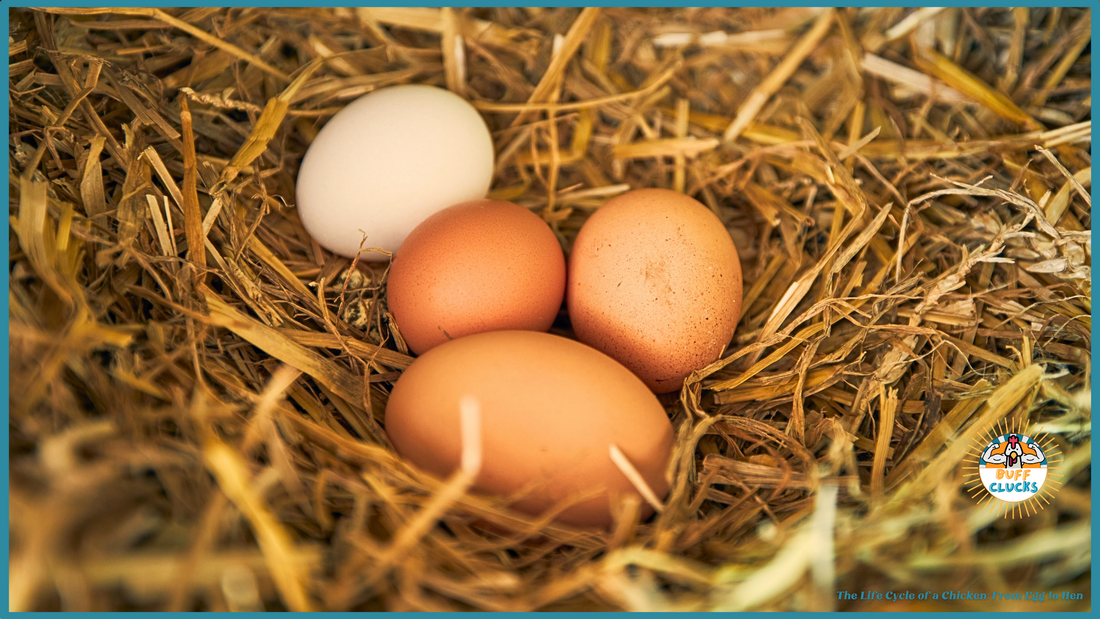
That eggshell is a multitasking marvel, sporting between 7,000 and 17,000 tiny holes. Think of it as nature's version of air conditioning, allowing oxygen and carbon dioxide to do the cha-cha in and out of the shell.
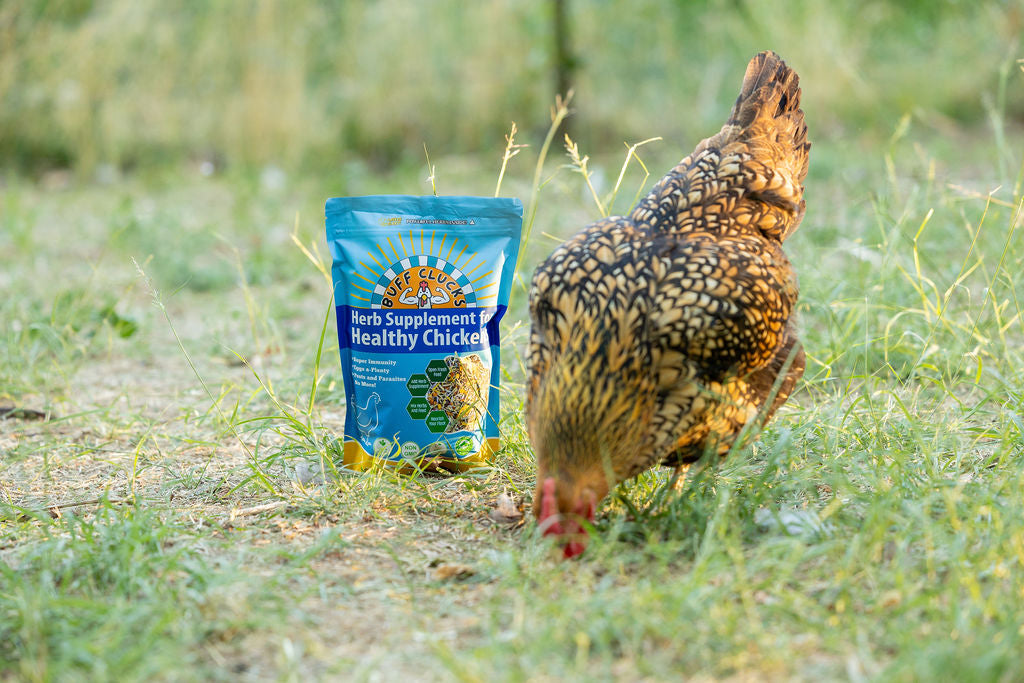
A hen usually lays about 12 eggs in a clutch, dropping one per day like clockwork. Now that’s what we call consistency! If your hens aren’t quite the nurturing type, our Herb Supplement for Backyard Chickens helps boost their overall health and laying prowess. Healthy hens lay strong, viable eggs!

Stage 3 — The Hatchling
The big day arrives, and with tiny pecks and soft chirps, a chick makes its grand entrance. Hatchlings are fragile, fluffy, and irresistibly adorable. Once they’ve dried off and fluffed up (which takes about as long as binge-watching an episode of your favorite show), they’re ready to move into a brooder.
In the brooder, it’s all about the essentials, water, feed, and warmth. Introducing chicks to their water and food is like their first day at school, minus the backpack. Make sure their food is packed with protein, vitamins, and minerals because these little peepers are about to hit a major growth spurt.
Speaking of hydration, AquaBoost is the real MVP. This water supplement ensures your chicks stay hydrated, chirpy, and ready to take on the world, one tiny peep at a time. Give your chicks the boost they need to thrive from day one.
Stage 4 — The Chick
Chicks grow at an egg-straordinary rate. Feathers start replacing fluff by week two, and by week six, they look more like mini chickens. This stage is all about exploring, eating, and stretching those tiny wings.
Now, if your chicks are lucky enough to be raised by a broody hen, they’ll get a front-row seat to Chicken Life 101. Mama hen teaches them everything from what snacks to gobble up to what shady spots to avoid. Watching a hen parade around with her chicks is downright adorable, but don’t let those fluffy peeps fool you, she’s in full mama bear mode and will not hesitate to peck first and ask questions later if you mess with her babies.
If you’re raising chicks without a broody hen, don’t worry. Bonding is just a matter of time and snacks. Talk to your chicks, hand-feed them, and soon they’ll think of you as their slightly taller, less-feathery parent. Dust baths also make their debut. Want to level up the spa experience? Sprinkle some CoopShield in the dust bath area. This mix of diatomaceous earth and herbs keeps pests at bay while your chicks indulge in their self-care routines.

Stage 5 — The Pullet
Pullets (young hens) and cockerels (young roosters) are awkward but charming. Around 6-8 days, they start shedding their soft down coats in favor of their first real feathers, think of it as their version of swapping pajamas for jeans. By week four, they hit their first mini molt, and by 7-12 weeks, the second molt is in full swing, revealing subtle hints of who’s a cockerel and who’s a pullet.
This is the age where they start to assert themselves and engage in some feathery chest-bumping to climb the social ladder. Yes, the infamous pecking order begins here! Expect a few stare-downs and maybe some minor scuffles, but rest assured, it’s all part of the learning curve.
When they’re about two-thirds the size of your adult chickens, you can start introducing them to the rest of the flock. It’s like the first day of high school, plenty of awkward encounters and a lot of hiding behind the coop until they find their place. Short supervised trips outside can start around 8 weeks (once they’re fully feathered). Just make sure they’re safe from predators, sunburns, and breezy drafts. If they start looking distressed, it’s back inside for snuggles and snacks.
This is also the perfect time to introduce Herb Supplement into their diet. It supports immunity, boosts digestion, and encourages healthy laying. Plus, the herbs add a little flavor flair to their feed.
Stage 6 — The Hen
By now, your hens are egg-laying pros. Hens typically start laying around 20 weeks. Their first eggs might be small, wonky, or even a bit lopsided, but don’t worry, their egg-laying machinery is just warming up. Some folks debate when a pullet officially becomes a hen. Is it after her first egg or after her one-year coop-iversary? Either way, it’s all about sexual maturity.
Transitioning your ladies to layer feed around 16-20 weeks keeps their eggshells strong and their feathers glossy. Layer feed is lower in protein but higher in calcium, perfect for egg production. For those extra calcium needs, a side of free-choice oyster shells lets each hen top up as needed.

Life Beyond Laying
Even after your hens take a break from the egg business, they’ve still got plenty to offer! The life cycle of a chicken can strut around for 3 to 8 years on average, and some, like the record-breaking 20-year-old hen, really go the eggstra mile.
Sure, some chicks might not make it early on due to genetics, incubator oopsies, or illness, but most will thrive unless something’s seriously wrong. The biggest threats? Coccidiosis and Marek’s disease, both preventable with a quick vaccine.
Want to keep your hens happy and healthy? A safe coop, clean run, and fresh ground can help prevent illness and extend their feathery retirement. But, even in retirement, hens keep the coop lively, because every flock needs a wise old bird.
A Cluckin' Good Life Cycle
Getting to know the life cycle of a chicken makes you appreciate every fluffy, feathered stage. From chirping hatchlings to proud egg-layers, chickens do best when given the right care. With natural supplements like:
- Herb Supplement For Backyard Chickens
- AquaBoost—Water Supplement for Backyard Chickens
- CoopShield—Diatomaceous Earth and Herbs for Chickens
You’re not just caring for chickens, you’re creating a healthy, happy flock that feels right at home. So, here’s to your chickens at every stage of life. May your coop always be lively, your eggs plenty, and your mornings filled with the sound of content clucks.
Frequently Asked Questions: Life Cycle of a Chicken
How long does a chicken live?
Backyard chickens typically live 5-10 years with good care, though productive laying usually declines significantly after years 3-4. Heritage breeds often live longer than production hybrids. With attentive care and protection from predators and disease, individual birds occasionally reach 10-12 years, though these are outliers. Most keepers find their flock composition shifts through culling, predation, and natural death over a 5-7 year cycle.
What are the stages of a chicken's life?
A chicken's life progresses through: embryo (21 days of incubation), chick (hatch to approximately 8 weeks, dependent on heat and starter feed), pullet (8 weeks to first egg, typically 18-24 weeks), laying hen (first egg through peak production years 1-2), mature hen (years 3+, declining but ongoing production), and senior hen (reduced or stopped laying, living as a flock member). Each stage has distinct care requirements.
When do chickens start laying eggs?
Most standard laying breeds begin producing eggs between 18-24 weeks of age. High-production hybrids (ISA Browns, Leghorns) may start as early as 16-18 weeks. Heritage breeds and ornamental breeds often take longer — 24-30 weeks. First eggs are typically small and may have double yolks or soft shells. Full-size, consistent production usually establishes within a few weeks of the first egg.
How long do chickens lay eggs?
Hens are born with all the eggs they will ever produce (follicles) already present. Production peaks in the first 1-2 years, then declines approximately 15-20% each subsequent year. Most hens maintain meaningful production through years 3-4. By year 5-6, production is significantly reduced but continues at low levels in many birds. Heritage breeds often maintain longer production careers than high-production hybrids bred for maximum short-term output.
Do old chickens still lay eggs?
Old hens (5+ years) typically lay infrequently — occasionally one or two eggs per week, or seasonally in spring only. While not economically productive by commercial standards, their eggs are often of excellent quality (larger, with richer yolks) from the accumulated nutrition and wellness management of their lives. Many keepers keep senior hens as valued flock members beyond their productive years for their social contributions and companionship.