6 Reasons Why Roosters Crow
The short answer: Roosters crow for 6 main reasons — sunrise instinct, territorial dominance, attracting hens, social communication, predator alerts, and hormonal changes. Each type of crow sounds different and happens at different times of day.
There's something oddly charming about waking up to a rooster's crow — until it's 3:47 AM and you've got a mouthful of pillow. If you've ever stared at the ceiling wondering what that noisy beaked alarm clock could possibly be yelling about now, you're not alone. The truth is, there's more than one reason why roosters crow — and not all of them are about greeting the sunrise.
1. Sunrise Instinct — The #1 Reason Roosters Crow
Yes, the classic cock-a-doodle-doo at dawn is real — but it's not just about the sun. Roosters have an internal circadian clock that tells them when morning is about to break, and they like to be the first to announce it.
Even if you black out the coop like it's Vegas at midnight, they'll still crow — because their internal timer says go time. It's not light that triggers them; it's their built-in biological rhythm. So if you thought blackout curtains would buy you silence? Nice try. You're up when they're up.
2. Territorial Dominance — "This Coop Ain't Big Enough for Both of Us"
One of the top reasons why roosters crow is plain old territory. Roosters are the puffed-chest protectors of their flock. If another rooster is within earshot, it's on. They'll trade crows like it's a barnyard rap battle — loud, competitive, and relentless.
Got multiple roosters? Expect constant vocal sparring. Each one wants to be the boss bird, and they'll crow their hearts out to make sure everyone — hens, cats, you, the mailman — knows who's in charge.

3. Attracting Hens — Crowing as Courtship
Move over, peacocks. Roosters are not above a little showboating. Crowing is also their version of flirtation — when they puff up, strut, and belt out a crow, they're putting on a one-bird Broadway show for the hens. The louder and more frequent the crowing, the more confident (or desperate) the roo. Feathered dating app behavior, minus the swiping.
4. Social Communication — Rooster Gossip Hour
Here's one of the more surprising reasons why roosters crow: they just like to talk. Some roosters crow in response to sounds — your footsteps, a car door, a neighbor's dog. Others crow because they heard another rooster crow, even miles away.
Roosters crow to share information, assert dominance, or just… because. Like a noisy neighbor with a leaf blower, sometimes the answer is simply: because they can.
5. Predator Alert — The Alarm System Crow
Roosters act like tiny winged alarm systems. If something feels off — a predator nearby, a strange shadow, or you walking out in your bathrobe — they'll crow to alert the flock. This type of crowing sounds sharper and more urgent. Less "good morning," more "SOMETHING'S IN THE BUSHES."
Stress and perceived threats amplify this behavior. That's why it helps to keep your flock's immune system strong and their environment calm. A relaxed flock is a quieter flock.

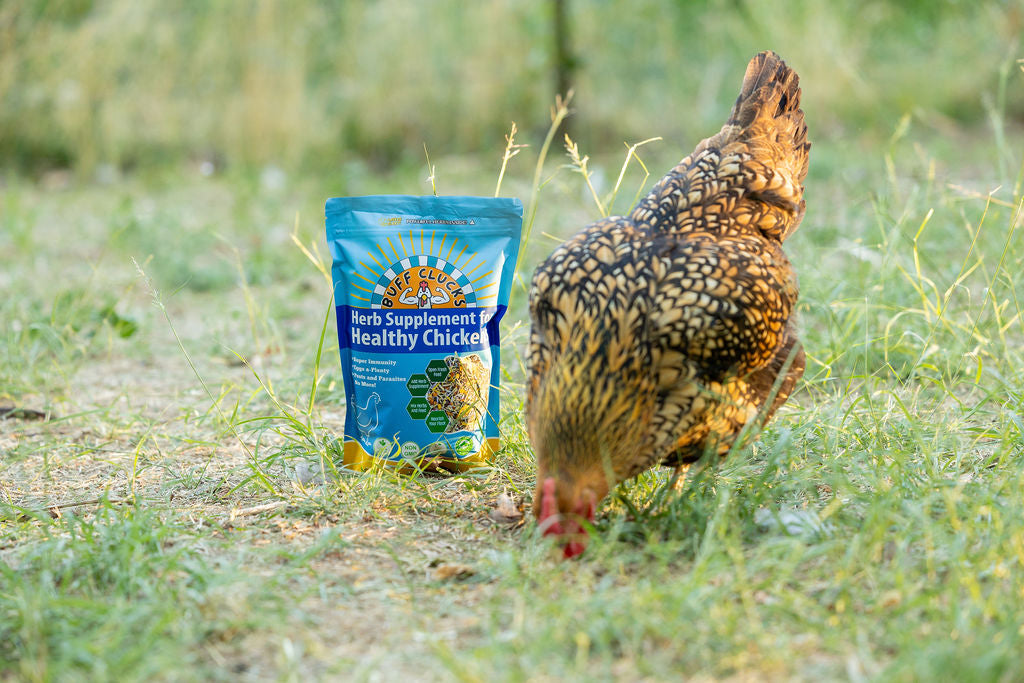
Sprinkling Buff Clucks Herb Supplement into their feed — loaded with garlic, oregano, and rosemary — supports immunity and helps keep the whole flock calmer when coop stress spikes.
6. Hormones — Why Young Roosters Crow the Most
Young roosters entering their adolescent phase crow for any reason: excitement, boredom, puberty-induced chaos. These adolescent crows often sound squeaky and confused — a kazoo having an identity crisis.
Once their hormones even out and the pecking order is established, the crowing usually settles down. Until then, buckle up.
How to Reduce Rooster Crowing (Without Silencing His Personality)
If your rooster is crowing more than you're sleeping, these strategies can help:
- Keep the coop dark and quiet in early morning hours. While a rooster's internal clock is stubborn, minimizing early light and sound can delay his pre-dawn performance — think snooze mode for your feathered alarm clock.
- Limit the number of roosters per space. More than one rooster in a confined area turns your coop into a crowing contest. If they can hear each other, they'll compete to out-shout one another around the clock.
- Reduce environmental stress with a healthy, herb-rich diet. A rooster on edge crows more frequently and erratically. Sprinkling CoopShield in dust baths eliminates mites and other irritants. A relaxed rooster is a quieter rooster.
- Prioritize hydration. Dehydration causes irritability and restlessness — both amplify crowing. Add AquaBoost to their water to support hydration with natural herbs and electrolytes.

Loud Mouth, Big Heart
Roosters crow for a cocktail of reasons: sunrise instinct, territorial dominance, hormones, rivals, romance, random gossip, and good old-fashioned drama. It's part instinct, part ego, and part neighborhood news bulletin.
Understanding why roosters crow won't silence the squawk entirely — but it helps you work with their rhythms instead of constantly battling against them. Once you realize your rooster isn't just being obnoxious — he's protecting his flock, advertising his awesomeness, or just having his say — it's a little easier to roll with the noise.
Just maybe invest in some earplugs, too.
Frequently Asked Questions: Why Do Roosters Crow?
Why do roosters crow so early in the morning?
Roosters crow in the early morning because of their internal circadian rhythm — a biological clock that anticipates sunrise. This instinct is hardwired and not triggered by light alone, which is why blackout curtains don't stop early morning crowing. The rooster's body simply knows when dawn is approaching.
Why does my rooster crow all day, not just in the morning?
Roosters crow throughout the day for many reasons beyond sunrise: territorial competition with other roosters, attracting hens, responding to environmental sounds, alerting the flock to perceived threats, or simply as social communication. All-day crowing is completely normal rooster behavior.
Why do roosters crow at night?
Roosters may crow at night in response to artificial lights, sudden noises, predator activity near the coop, or disruptions to their sleep. A rooster crowing at night is often signaling stress or a perceived threat. Checking for predators and reducing environmental disturbances can help.
Do roosters crow more when stressed?
Yes. A stressed rooster crows more frequently and erratically. Common stressors include predator presence, competition from other roosters, mite or parasite infestations, poor nutrition, and dehydration. Reducing stress through a clean coop, herb-rich diet, and proper hydration often reduces excessive crowing.
Can you stop a rooster from crowing?
You cannot fully stop a rooster from crowing — it is an instinctive behavior. However, you can reduce the frequency by minimizing early morning light exposure, keeping only one rooster per confined space, reducing environmental stressors, and supporting overall flock health with proper nutrition and hydration.
Why does my young rooster crow so much?
Young roosters (cockerels) crow frequently and erratically as they reach sexual maturity and establish their place in the pecking order. Adolescent crowing often sounds squeaky or inconsistent. This behavior typically settles down once the rooster matures and the flock hierarchy is established.