Winter Chicken Behavior: Coop Boredom Is Real
Winter chicken behavior changes the moment snow locks the run and turns free ranging into a distant memory. Chickens built for all-day foraging suddenly find themselves snowed in, staring at the same flock mates like coworkers stuck in an endless meeting. Boredom creeps in fast, and once boredom settles, pecking, bullying, and weird coop drama follow close behind.
Understanding chicken behavior in winter helps you stop problems before feathers fly. Winter does not create bad chickens; it exposes unmet needs that were easy to ignore when the ground stayed thawed.
Why Winter Confinement Triggers Behavior Problems
Cold weather shrinks a chicken’s world overnight. No bugs, no fresh dirt, no wandering the yard pretending they run the place. Movement drops, stimulation disappears, and all that unused energy looks for somewhere to go.
Stress builds quietly under these conditions. Pecking and bullying rarely start as aggression; they start as boredom mixed with frustration. Winter behavior of chickens often reflects the environment more than personality.
How the Pecking Order Changes Indoors
Hierarchy always exists, but winter puts it under a microscope. Less space means fewer escape routes, and dominant birds feel bolder when rivals cannot simply walk away. Small squabbles repeat faster and last longer.
Early signs show up before damage does. Hard staring, blocking access to feeders, short chasing bursts, or constant grumbling noises all signal rising tension. Catching these moments early keeps winter chicken behavior from spiraling.
Common Winter Behavior of Chickens to Watch For
Behavior changes follow familiar patterns once boredom takes hold. Spotting them early prevents injuries and long-term stress.
- Feather picking along backs or vents
- Aggressive pecking around food
- Pacing the same path repeatedly
- Loud squawking over minor disputes
-
Sudden flare-ups after long, quiet stretches
None of these behaviors means your flock turned mean. Chicken behavior in winter reflects pressure without an outlet.

Space Matters More Than Temperature
Extra warmth does not fix crowding. Chickens tolerate cold surprisingly well, but they tolerate cramped quarters very poorly. Coops that worked fine in summer often feel tight once birds stay inside full-time.
Vertical space helps immediately. Extra roost bars, low platforms, or staggered perches break sightlines and reduce constant face-to-face tension. More options mean fewer arguments.
Enrichment Changes Chicken Behavior in Winter Fast
Boredom disappears once chickens have jobs again. Enrichment works best when it mimics natural behaviors like scratching, pecking, and problem-solving.
Effective winter boredom busters include:
- Hanging cabbage or squash just above head height
- Tossing scratch grains deep into bedding
- Rotating safe pecking objects every few days
- Adding straw boxes or leaf piles to explore
Rotation keeps interest high. Familiar toys lose their magic fast, so novelty keeps winter behavior of chickens playful instead of hostile.
Nutrition Affects Mood More Than You Think
Cold weather increases calorie needs, and protein gaps show up quickly in feathers and attitude. Chickens missing nutrients often redirect that urge toward flock mates.
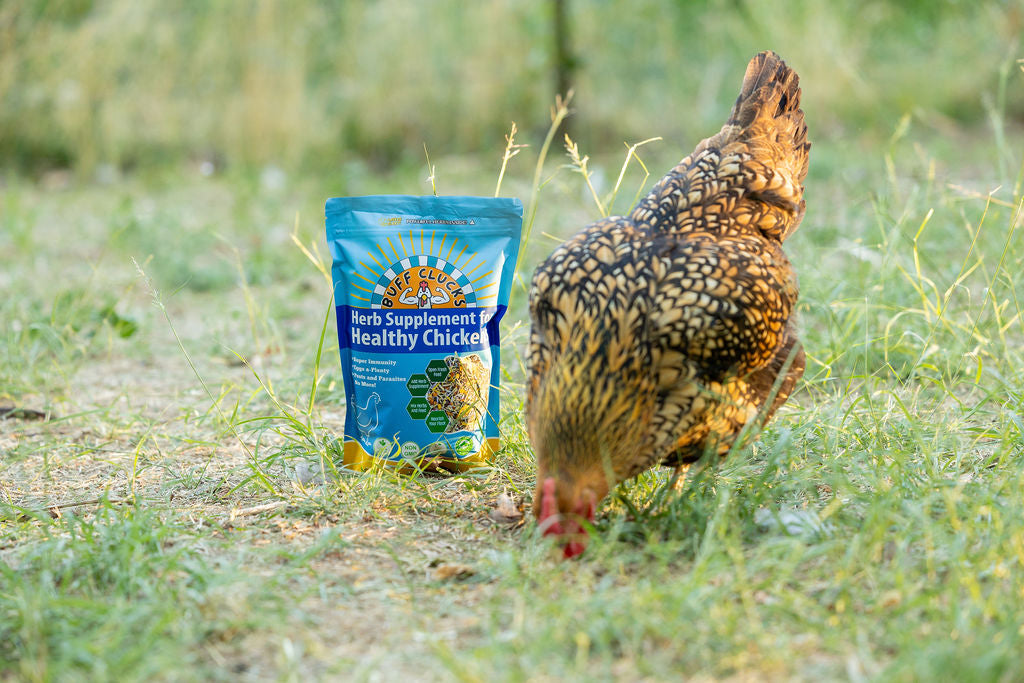
Balanced feed sets the foundation, but digestion efficiency matters just as much. Supporting gut health helps birds absorb what they eat instead of competing aggressively for more. A steady routine using Buff Clucks Herb Supplement supports digestion and immune balance, which helps smooth behavior during long winter confinement without overstimulation.
Lighting and Routine Shape Winter Chicken Behavior
Inconsistent lighting causes more stress than shorter days alone. Random schedules confuse internal clocks and make birds edgy. Timers beat manual switches every time.
Morning light extensions work best. Soft, predictable light before sunrise supports feeding routines while allowing natural roosting at dusk. Predictability calms nerves and stabilizes chicken behavior in winter.

Clean Coops Create Calmer Chickens
Moisture, ammonia, and damp bedding irritate skin and lungs. Discomfort lowers tolerance and raises tempers. Chickens, feeling uncomfortable, snap faster and peck harder.
Dry bedding, fresh air without drafts, and routine cleaning create a calmer environment. Comfortable birds act like themselves instead of stressed roommates.
What to Do When Winter Behavior Turns Ugly
Winter behavior issues rarely fix themselves once pecking starts. Small scuffles can snowball fast when boredom and confinement keep birds locked together day after day. Quick, calm action stops the cycle before the whole coop turns into a reality show nobody asked for.
- Separate injured birds right away to remove visual triggers that keep pecking going
- Add fresh enrichment immediately to redirect energy and break fixation
- Increase the number of feeders and waterers to reduce competition pressure
- Adjust space, stimulation, and routines before making drastic changes
- Focus on nutrition and digestion support to help stabilize behavior
Early intervention keeps problems manageable. Most winter behavior flare-ups calm down quickly once pressure points disappear, and chickens regain a sense of control over their space. A steady hand now saves feathers, stress, and sanity later.
Healthy Winter Chicken Behavior Looks Boring
Calm winter flocks are not flashy, and that is exactly the goal. Birds spend more time resting, less time squabbling, and keep their feathers where they belong, even when snow stacks up outside the coop. A quiet coop usually means needs are being met.
Egg production slows in response to shorter daylight instead of stress or depletion. Spring feels easier on these birds because winter never pulled them into survival mode in the first place.
Small Changes Make a Big Difference
Chicken behavior in winter improves through dozens of small decisions that stack together. Consistent routines, thoughtful enrichment, and steady nutrition keep boredom from taking over.
Winter feels long for people, but winter feels endless for chickens stuck indoors. Giving your flock meaningful ways to spend their days keeps peace in the pecking order and feathers where they belong.