How Long Do Chickens Live? Lifespan by Breed and What It Means for Your Flock
Updated June 10, 2026 • By Celia Hatch
The short answer: Most backyard chickens live 5 to 10 years, but that number swings hard based on breed. Production hybrids burn bright and short (3 to 5 years). Heritage breeds like Brahmas and Plymouth Rocks routinely hit 8 to 10 years or beyond. What you feed them, how well you protect them, and the daily care routine you build all play a real role in where your flock lands on that spectrum.

So you are looking at a flock of hens and wondering how many more years you actually have with them. It is a fair question, and it does not have a single answer because not all chickens are built the same. A production hybrid and a heritage hen live very different lives, laid out on very different timelines.
This guide breaks down lifespan by breed type, explains what shortens life for most backyard birds, and walks through exactly what you can do to push that number higher.
In This Guide
Chicken Lifespan by Breed Type
Breed type is the single biggest predictor of how long a chicken will live. Here is how the four main categories break down.
Production Hybrids: 3 to 5 Years
ISA Browns, Red Stars, Golden Comets, and similar hybrids are bred for one thing: eggs, fast, and a lot of them. A first-year ISA Brown can lay 300 or more eggs. That is extraordinary output, and it costs them. Their reproductive systems run at a pace their bodies were not designed to sustain long-term.
By age 2 to 3, production drops sharply. By age 4 to 5, internal laying and reproductive cancers become common. These birds are not poorly made; they are purpose-built for commercial egg production, and their lifespan reflects that purpose.
Worth knowing: Internal laying (when yolks fall into the body cavity instead of passing through the oviduct) is the leading age-related cause of death in production hens. It is not preventable, but lower laying intensity slows its onset.
Dual-Purpose Breeds: 5 to 7 Years
Dual-purpose breeds like Rhode Island Reds, Barred Plymouth Rocks, Australorps, and Wyandottes split the difference. They lay well enough to be economically useful, but not at the breakneck pace of hybrids. Their bodies carry a longer useful lifespan as a result.
Five to seven years is a solid estimate, though many keepers see healthy dual-purpose hens still moving around and laying occasionally at 8 or 9 years. Australorps especially are known for their resilience and longevity.
Heritage Breeds: 8 to 12 Years

Brahmas, Dominiques, Buckeyes, Jersey Giants, and other true heritage breeds are built for longevity. They grow slower, mature later, and lay fewer eggs than production breeds. In exchange, their bodies are not under nearly the same reproductive strain.
Heritage hens routinely live 8 to 10 years with good care. Well-protected flocks with solid nutrition regularly see birds reaching 12 years. See our guide to the best egg laying breeds if you are building a flock and weighing production versus longevity.
Landrace Breeds: 10 to 15 Years
Swedish Flower Hens, Icelandic Chickens, and other landrace breeds developed over centuries through natural selection rather than commercial breeding programs. They are rugged, adaptable, and wired for survival. Lifespans of 10 to 15 years are documented, and the hard-to-find nature of these breeds is the only real barrier for most backyard keepers.
Landrace breed: A chicken variety developed through natural adaptation to a specific environment over many generations, rather than selective breeding for production traits. Genetically diverse, resilient, and typically long-lived.
Quick Reference: Lifespan by Popular Breed
| Breed | Type | Avg Lifespan | Eggs/Year |
|---|---|---|---|
| ISA Brown | Production hybrid | 3 to 5 years | 300 to 350 |
| Golden Comet | Production hybrid | 4 to 5 years | 250 to 300 |
| Rhode Island Red | Dual-purpose | 5 to 8 years | 200 to 300 |
| Barred Plymouth Rock | Dual-purpose | 6 to 8 years | 200 to 280 |
| Australorp | Dual-purpose | 6 to 10 years | 250 to 300 |
| Wyandotte | Dual-purpose | 6 to 12 years | 200 to 240 |
| Brahma | Heritage | 8 to 10 years | 130 to 150 |
| Dominique | Heritage | 8 to 12 years | 180 to 230 |
| Silkie | Ornamental bantam | 7 to 9 years | 100 to 120 |
| Swedish Flower Hen | Landrace | 10 to 14 years | 150 to 200 |
How Many Years Do Chickens Actually Lay?
Hens are born with all the egg follicles they will ever have. That number is fixed from hatch day. What changes is the rate at which those follicles are used.
- Year 1 to 2: Peak production. This is when your flock is at full output, whether that is 300 eggs a year for a hybrid or 180 for a dual-purpose breed.
- Year 3 to 4: Production drops roughly 15 to 20 percent per year. Still meaningful output, especially from heritage breeds.
- Year 5 to 6: Production slows significantly. Heritage hens may still lay occasionally. Hybrids are often retired or have passed by this point.
- Year 7 and beyond: Some heritage hens continue laying a handful of eggs per season. Consider it a bonus rather than a reliable supply.
Good to know: Supporting consistent laying with targeted nutrition matters most in years 2 through 4, when production is declining but the hen is still productive. Oregano, Garlic, Lavender, and Basil in a daily herb supplement directly support immunity and laying consistency during this window.
What Shortens a Chicken's Life Most
Most premature deaths in backyard flocks come down to a short list of preventable causes.
Predators
The number one cause of early death in backyard flocks, bar none. Hawks, raccoons, foxes, weasels, and dogs all take birds that should have had years left. A properly built coop with hardware cloth (not chicken wire), an apron around the base, and a secure latch eliminates most of this risk. This single factor probably adds more years to your flock than anything else on this list.
Internal Parasites
Worms quietly drain a bird over months before symptoms appear. A hen with a heavy worm load eats more, lays less, and looks rough around the edges before she looks obviously sick. Routine deworming and parasite prevention are basic flock maintenance, not optional extras.
Respiratory Disease
Poor ventilation, dusty bedding, and overcrowding set up respiratory infections that can take birds quickly or leave them chronically compromised. A coop that breathes well without being drafty is the single best prevention.
Reproductive Disorders in Laying Hens
Internal laying, egg peritonitis, and ovarian cancer are the most common age-related killers in laying hens. You cannot fully prevent them, but lower production intensity (via breed choice) and good nutrition reduce their likelihood and delay onset.
Nutritional Deficiencies
A hen pulling calcium for eggshells that is not getting enough in her diet will take it from her own bones. Over years, this matters. Balanced layer feed, access to oyster shell, and a daily supplement covering immune and digestive support make a measurable difference in long-term health.
5 Things That Actually Help Chickens Live Longer

1. Lock Down the Coop
If your run and coop are not predator-secure, everything else is secondary. Hardware cloth buried in an apron, a solid latch on the coop door, and a roof over the run are non-negotiable. This is the highest-leverage longevity investment you can make.
2. Feed for Longevity, Not Just Production
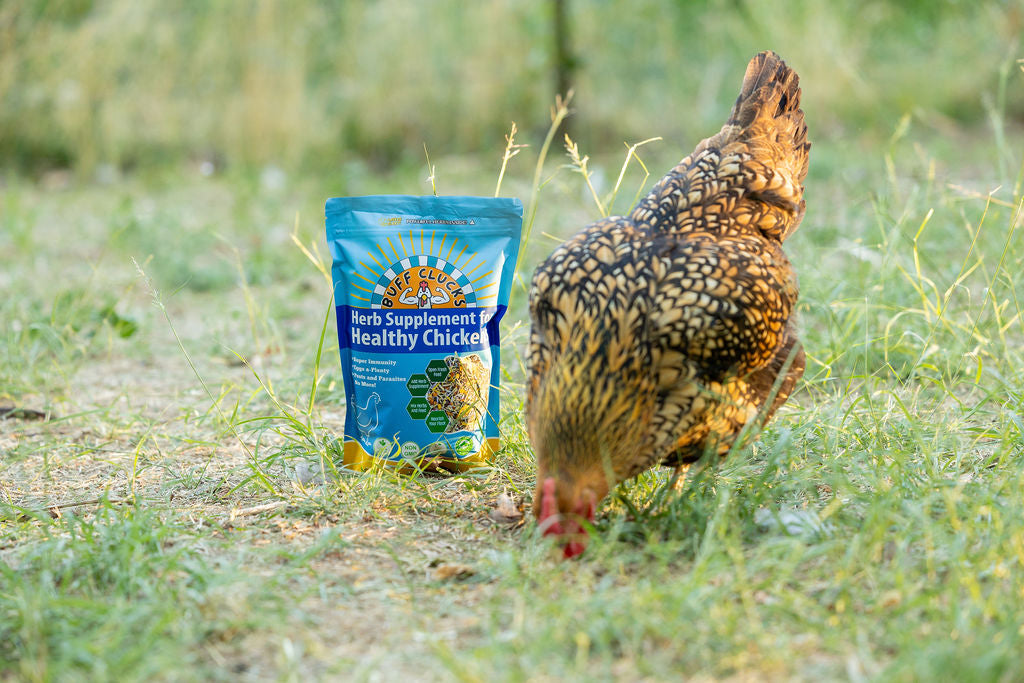
Quality layer feed, oyster shell on the side, and a daily herb supplement that covers immunity and digestive health goes further than most keepers realize. The Buff Clucks Herb Supplement covers seven ingredients with real jobs: Oregano for immune support, Garlic for natural parasite resistance, Lavender for stress and consistent laying, Basil for respiratory and yolk quality, Calendula for feather health, Rosemary for circulation, and Red Pepper Flakes to deter rodents while supporting circulation. One scoop per day in their feed.
3. Stay On Top of Parasites
Worms and external parasites like mites and lice compound over time. A bird that carries a moderate worm load for two years is not the same bird she could have been. Monthly prevention is easier than treating a heavy infestation, and it pays back in longevity.
4. Prioritize Hydration Year-Round
Clean, fresh water every day. In summer, add electrolytes to support kidney function and laying consistency. A dehydrated hen is a stressed hen, and chronic stress accelerates aging in the flock. AquaBoost adds electrolytes, probiotics, ACV, and Vitamin C to their waterer in one teaspoon per gallon.
5. Keep Stress Low
Overcrowding, frequent flock introductions, loud environments, and excessive handling all add stress that chips away at long-term health. Chickens with space to range, a stable flock hierarchy, and consistent daily routines simply live better. Less drama, longer lives.
What to Do With an Old Hen Who Has Stopped Laying
This is a question every keeper faces eventually. An old hen who is no longer laying is not worthless to the flock. Senior hens bring flock stability. They are often the social anchors that keep younger birds calm. They have lived through disease exposures that built up the flock's collective immunity history. And for a lot of keepers, they are just the old friend you have had for eight years, and that counts for something.
What they do not bring is much of an egg contribution. That trade-off is personal. There is no wrong answer here as long as the bird is not suffering.
The Buff Clucks Longevity Stack
Daily routine that supports a longer, healthier flock:
- Herb Supplement in feed daily (immunity, parasite resistance, laying support)
- AquaBoost in waterer (electrolytes + probiotics + ACV)
- Monthly parasite check and deworming protocol as needed
Frequently Asked Questions: How Long Do Chickens Live?
How long do chickens live on average?
Most backyard chickens live 5 to 10 years. Heritage breeds like Brahmas and Plymouth Rocks often reach 8 to 10 years or more. Production hybrids like ISA Browns average 3 to 5 years because their bodies work harder to lay at high rates.
What breed of chicken lives the longest?
Landrace breeds and slow-maturing heritage breeds tend to live longest. Swedish Flower Hens, Dominiques, and Brahmas regularly reach 10 to 12 years. Silkies are also known for long lives, often reaching 7 to 9 years despite their small size.
How long do production hybrid chickens live?
Production hybrids like ISA Browns, Red Stars, and Golden Comets typically live 3 to 5 years. Their reproductive systems are under significant stress from high laying rates, which can lead to internal laying and reproductive cancers earlier than heritage breeds.
What is the oldest chicken ever recorded?
The oldest verified chicken on record was Muffy, a Red Quill Muffed American Game hen who lived to 22 years. This is an extreme outlier. Most chickens, even with exceptional care, live 10 to 12 years at most.
How many years do chickens lay eggs?
Hens lay most productively in their first 1 to 2 years. Production drops roughly 15 to 20 percent each year after that. Most hens lay meaningfully through years 3 to 4, then taper off significantly. Some heritage breeds continue occasional laying into years 6 to 7.
Do chickens die of old age?
Yes. Age-related causes include internal laying and egg peritonitis, tumors, cardiovascular disease, and organ failure. In predator-secure, well-managed flocks, natural aging becomes the primary cause of loss rather than predation or disease.
Does diet affect how long a chicken lives?
Absolutely. Chickens fed balanced nutrition with adequate protein, vitamins, and minerals consistently outlive birds on poor diets. Supplementing with supportive herbs like oregano for immunity and garlic for parasite resistance can contribute to longer, healthier lives.
What kills backyard chickens most often?
Predators are the number one cause of premature death in backyard flocks. After that, respiratory disease, internal parasites, reproductive disorders in laying hens, and egg binding are the most common causes. Good coop security and routine health care address most of these.
Is it worth keeping a hen that stopped laying?
Many keepers choose to keep retired hens as flock members. They contribute to social stability, can mentor younger birds, and represent years of relationship. It comes down to your resources and how you relate to your individual birds.
Do bantam chickens live longer than standard chickens?
Bantams often live as long or longer than standard breeds, with many reaching 8 to 10 years. Silkies, a popular bantam, are known for particularly long lifespans. Their smaller size means less metabolic strain compared to large production breeds.
How can I help my chickens live longer?
The biggest factors are predator protection, balanced nutrition, clean water, parasite control, and low-stress living conditions. Routine health checks to catch issues early and a good daily supplement routine round out a solid longevity plan.
How long do Silkies live?
Silkies typically live 7 to 9 years, with some reaching beyond 10. They are known for calm temperaments and strong constitutions despite their fluffy, non-waterproof feathers. They need dry, draft-free housing to stay healthy long-term.
At what age do chickens stop being productive?
Most hens see a significant drop in egg production by year 3 to 4. They are not worthless after that point, but their egg output will not match their peak years. Heritage breeds may continue some laying into years 5 to 6.