Chicken Losing Feathers? 7 Reasons It's Not Molting
The short answer: Chickens lose feathers for at least 7 distinct reasons beyond molting — including mites, lice, feather pecking, nutritional deficiency, overcrowding, brooding behavior, and vent gleet — and correctly identifying the cause determines whether the fix is a treatment, a diet change, or a management adjustment.
Chicken losing feathers is one of those backyard moments that sends every keeper into full detective mode. You spot a bald patch and immediately assume the worst. Molting gets the blame most often, but it is far from the only culprit.
There are at least seven other reasons behind bare backs, patchy necks, and missing tail feathers. The good news? Most are totally fixable once you know what you are looking at.
1. Mites Are Causing Chicken Feather Loss Faster Than You Think
External parasites rank as one of the top causes of how chickens lose feathers in backyard flocks. Mites bite and irritate the skin, pushing hens to over-preen and pull out their own feathers. Left unchecked, an infestation spreads fast through an entire flock.
Check your birds at night when mites are most active. Part the feathers near the vent, under the wings, and along the neck. Look for tiny moving specks or clusters of eggs at the feather shafts.
Red mites hide in coop cracks during the day. That makes them tricky to catch on the bird alone. Dust your coop floors, nesting boxes, and perch edges regularly with CoopShield to create a natural barrier that keeps mites out.
2. Lice Are a Sneaky Driver of Chicken Feather Loss
Lice live directly on the bird and feed on dead skin and feather debris. They irritate the skin constantly, and heavy infestations cause serious chicken feather loss over time. Unlike mites, lice are visible during the day because they never leave the host.
Part the feathers near the vent and the base of the neck. Look for fast-moving, straw-colored insects and clusters of white eggs clumped at feather shafts. Catching lice early saves you weeks of dealing with patchy, irritated birds.
Keeping your coop clean and dry is your first line of defense, and dusting bedding, nesting boxes, and dust bath areas with CoopShield helps create a natural barrier that makes it harder for lice to stick around and spread.
For a full breakdown on telling them apart and what to do, read Mites vs. Lice: How to Tell the Difference and What to Do About It.
3. Feather Pecking and Flock Bullying
Chicken losing feathers from pecking is incredibly common and often overlooked. Dominant hens target lower-ranking birds, and once blood appears, the whole flock escalates. Stress, boredom, and overcrowding push normal pecking into full-on bullying behavior.
Signs Your Flock Has a Pecking Problem
Bare patches on the back or tail base are the clearest giveaway. These spots sit exactly where a dominant hen can reach mid-peck. Missing feathers look ragged and uneven rather than clean-edged like a molt.
Redness or broken skin signals the problem has already progressed. Chickens target the color red, so a small wound can worsen fast.
How to Stop the Pecking
Give your birds more space, enrichment, and things to do. Hang a head of cabbage, toss in some scratch, or add a second feeder. More room and more distractions solve most pecking order problems before they spiral.

4. Nutritional Deficiency Drives Chicken Feather Loss
Feathers are made almost entirely of protein, so a low-amino-acid diet causes serious chicken feather loss. Methionine and cysteine are the two biggest culprits. Without them, your hen cannot grow healthy plumage back.
Zinc and biotin deficiencies also affect feather quality and regrowth speed. Upgrade the diet before anything else. A high-quality layer feed covers the basics, but targeted herbal support accelerates recovery.
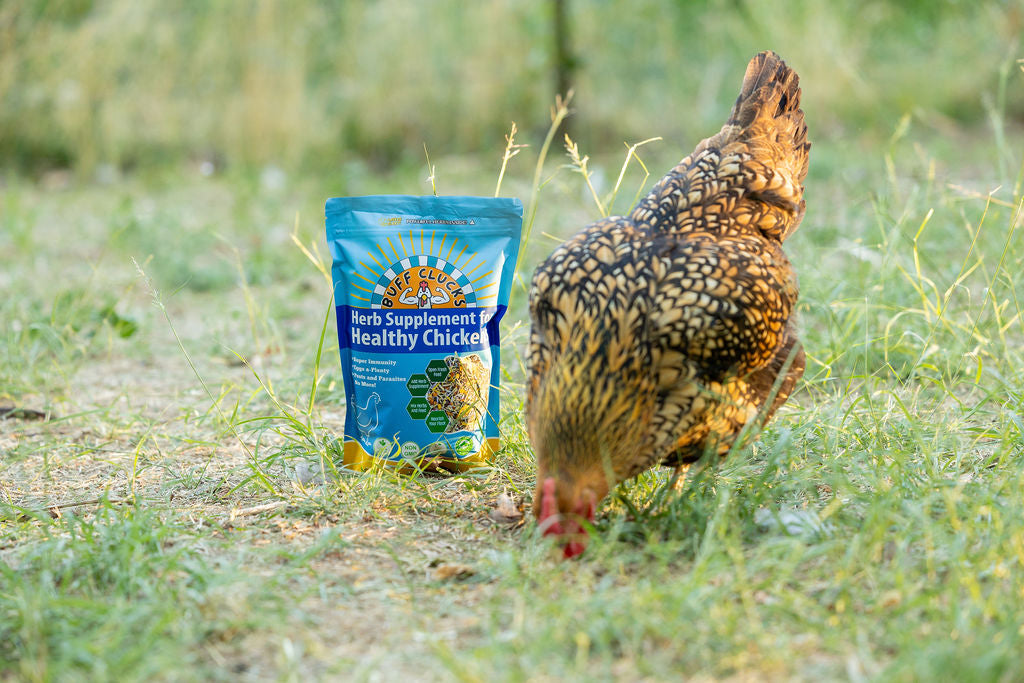
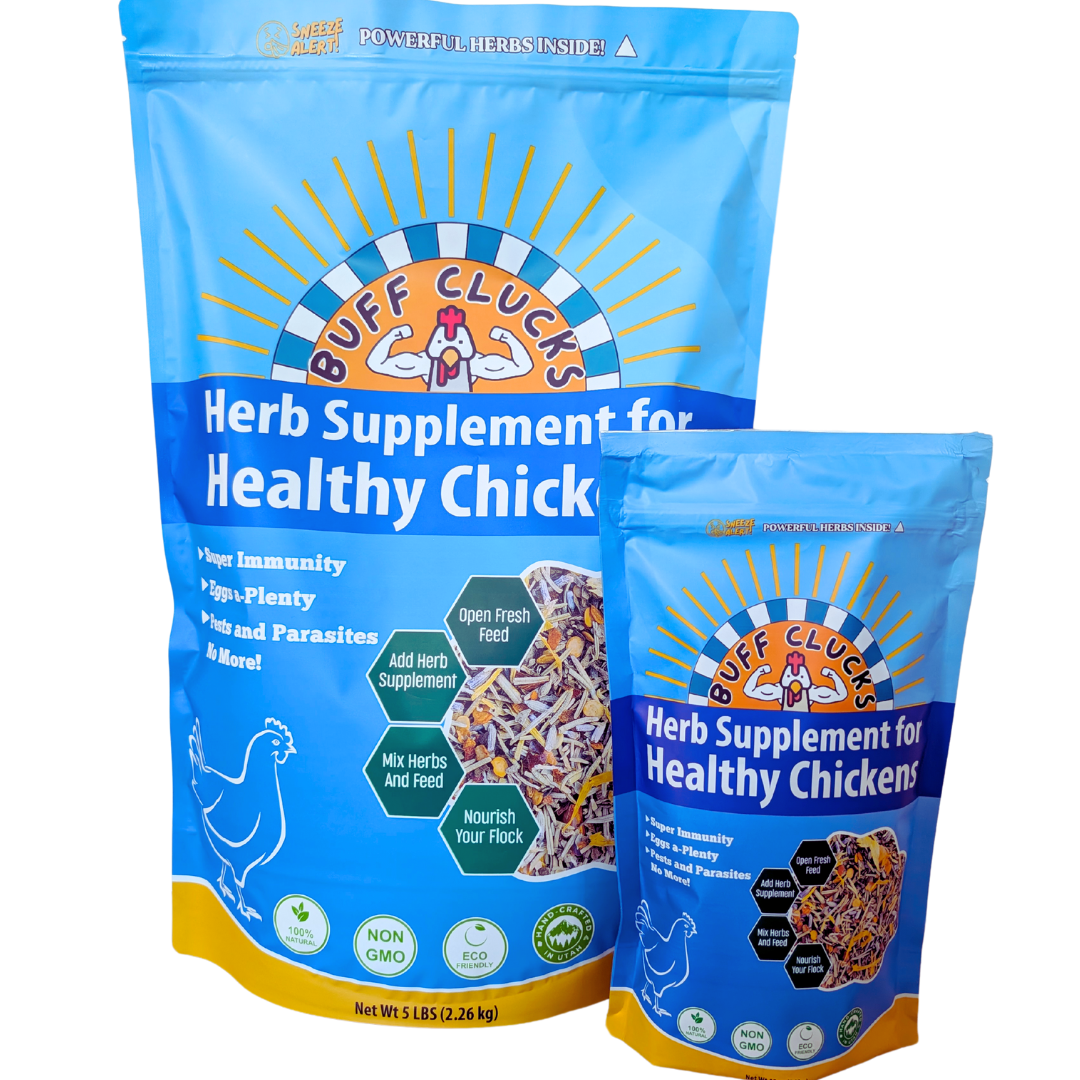
Buff Clucks Herb Supplement blends herbs that support nutrient absorption and overall hen health. It is an easy daily add-in that helps birds in active feather regrowth get more from every bite. Learning what herbs promote healthy feather growth gives you even more natural tools to speed things up.
5. Broody Behavior and Hormonal Feather Loss
A broody hen pulls her own breast feathers to line the nest and expose her brood patch. This is completely normal, hormone-driven behavior. The brood patch transfers heat directly from her skin to the eggs beneath her.
You will notice a deliberate, clean bald spot on the chest or belly. It looks very different from the ragged patches caused by parasites or pecking. Broody chicken losing feathers is temporary and self-resolving once her cycle ends.
6. Worms and Internal Parasites Drain Feather Health
Internal parasites are sneaky. Worms compete directly for the nutrients your hen absorbs. Her body simply cannot prioritize feather regrowth while fighting on another front entirely.
A bird carrying a heavy worm burden often shows dull, brittle feathers before bald patches even appear. Weight loss, pale combs, and reduced egg production usually follow. Staying on top of chicken digestion health is one of the most underrated ways to keep feathers full and coats shiny.
Routine deworming is essential for any backyard flock. If you suspect worms are driving your chicken feather loss, WormStop is a natural option made with garlic, oregano, and pumpkin seed. It is safe to use even during laying season and easy to work into your regular routine.

7. Rooster Overbreeding Causes Bare Back Feather Loss
If you keep a rooster, hen feather loss on the back, saddle, and neck almost certainly comes from mating. A rooster grips the hen's back during mating, and his spurs tear out feathers over time. Hens in smaller flocks suffer more because the rooster has fewer birds to spread his attention across.
Here is what you can do:
- Maintain a healthy rooster-to-hen ratio. Aim for one rooster per eight to twelve hens at minimum. A higher ratio means less wear on any single bird.
- Use hen saddles. These small fabric covers protect the back and saddle from claw damage during mating. They give feathers a real chance to regrow without constant disruption.
- Monitor the most targeted hens closely. Bare skin left exposed invites pecking from flockmates. Address injuries early before they become a bigger problem.
- Consider separating an aggressive rooster temporarily. A short break gives heavily worn hens time to recover and regrow before he returns.
Feather regrowth takes four to six weeks on average. Give your girls time once you have addressed the source of damage.
8. Stress and Environmental Factors
Chronic stress suppresses immune function and disrupts normal feather cycles. Predator pressure, extreme heat, and sudden feed changes all trigger stress-related chicken feather loss. Stress does not cause feathers to fall out overnight, but it breaks down normal feather maintenance over time.
Support your flock's resilience by boosting chicken immunity naturally year-round. A stronger immune system helps birds handle environmental pressure without losing coat condition. Knowing how to spot common chicken ailments early also means stress-related feather issues never get the chance to escalate.
Frequently Asked Questions: Chickens Losing Feathers
Why is my chicken losing feathers but not molting?
Non-molt feather loss has several common causes: external parasites (mites or lice causing itching and feather damage), feather pecking from other birds (look for missing feathers on backs, heads, and vents), nutritional deficiency (especially low protein), overcrowding stress, a broody hen plucking her own breast feathers, or vent gleet (yeast infection causing irritation). Identifying the pattern and location of feather loss is the first diagnostic step.
How do I tell if feather loss is from mites or pecking?
Mite-related feather loss tends to cause broken, damaged feathers at the base and visible skin irritation. Inspect the bird at night with a flashlight to see mites moving on the skin. Pecking-related loss leaves cleanly pulled feathers and may show red, raw skin. If other birds are seen actively pecking the affected hen, or if the bare patches appear on easily-reached areas like back and tail, pecking is the likely cause.
Can poor nutrition cause feather loss in chickens?
Yes — protein deficiency is one of the most common nutritional causes of poor feather quality and loss. Feathers are made primarily of keratin (protein), and hens that don't get adequate dietary protein struggle to maintain and regrow feathers properly. If feathers look thin, brittle, or slow to regrow after damage, try increasing protein content through higher-protein feed or supplemental mealworms and dried insects.
What is the fastest way to stop feather pecking?
Address the underlying cause simultaneously with immediate management changes: isolate any bird with open wounds immediately (other birds will escalate pecking on visible red skin), apply Blu-Kote to wounds to disguise the red color, ensure adequate space (4+ sq ft per bird inside minimum), add enrichment to combat boredom, provide multiple feeding stations to reduce competition, and check protein levels in the diet.
Will my chicken's feathers grow back?
Yes — in most cases feathers will regrow once the underlying cause is addressed. New pin feathers begin emerging within 2-4 weeks of the problem being resolved. Full feather coverage typically returns within 6-12 weeks depending on severity. Supporting regrowth with extra dietary protein speeds the process. Older birds and those with follicle damage from severe pecking may have slower or incomplete regrowth.