How Many Eggs Does a Chicken Lay Per Week? The Real Answer by Breed
Updated June 3, 2026 • By Celia Hatch • Happy National Egg Day!
The short answer: How many eggs a chicken lays per week comes down almost entirely to breed. A production hybrid like an ISA Brown can hit 6 to 7 eggs per week in her prime. A heritage Rhode Island Red will give you a reliable 4 to 5. An ornamental Silkie might manage 2 to 3. And every breed slows down in winter, during molt, and as the years add up. Know your breed, set the right expectations, and support consistent production with the right nutrition.

It is National Egg Day, which means it is officially the one day per year where your family is legally obligated to act impressed when you walk in with a basket of eggs from the backyard. You earned it.
But the question we get more than almost any other is this: how many eggs should my hens actually be laying? And the honest answer is: it depends entirely on which breed is in your coop. Not what you feed them. Not how fancy the coop is. Breed first, everything else second.
Here is the full breakdown.
In This Guide
How Many Eggs Per Week by Breed
One egg takes a hen about 24 to 26 hours to form. That means the hard ceiling is one egg per day, and most hens average fewer than that across a full week. What varies by breed is how close they get to that ceiling, and how long they hold that rate as they age.
How egg laying works: Egg formation starts in the ovary and takes roughly 25 hours from yolk release to fully formed egg. A hen lays slightly later each day until she skips a day entirely, then the cycle resets. This is why high-producing breeds average 5 to 6 eggs per week rather than 7.
Here is the honest weekly output you can expect from the most popular backyard breeds, in their first and second year:
Quick Reference: Eggs Per Year and Per Week
| Breed | Eggs/Year | Eggs/Week (Yr 1) | Egg Color | Temperament |
|---|---|---|---|---|
| ISA Brown | 300 to 350 | 6 to 7 | Brown | Friendly, calm |
| Leghorn | 280 to 320 | 5 to 6 | White | Active, flighty |
| Golden Comet | 250 to 300 | 5 to 6 | Brown | Friendly, easygoing |
| Australorp | 250 to 300 | 4 to 6 | Brown | Calm, gentle |
| Rhode Island Red | 200 to 300 | 4 to 6 | Brown | Hardy, confident |
| Plymouth Rock | 200 to 280 | 4 to 5 | Brown | Docile, friendly |
| Wyandotte | 200 to 240 | 3 to 5 | Brown | Calm, cold-hardy |
| Easter Egger | 200 to 280 | 4 to 5 | Blue, green, pink | Friendly, curious |
| Brahma | 130 to 150 | 2 to 3 | Brown | Gentle giant |
| Silkie | 100 to 120 | 2 to 3 | Cream/tinted | Very gentle, broody |

The 5 Best Egg Laying Breeds, Explained
1. ISA Brown: 6 to 7 Eggs Per Week
The ISA Brown is a purpose-bred hybrid designed entirely for maximum egg output with a friendly temperament. She is not some ancient breed with centuries of history. She was engineered in the 1970s by a French company specifically for commercial laying operations, and the math shows. In her first year, an ISA Brown can hit 320 to 350 eggs. That is an average of 6 to nearly 7 eggs per week. She is easy to handle, good with kids, and lays consistently through her first two years. The trade-off is longevity: ISA Browns typically live 3 to 5 years. See our full guide to chicken lifespan by breed for the full picture.
2. Leghorn: 5 to 6 Eggs Per Week
White Leghorns are the industry standard for commercial white egg production, and for good reason. A well-fed Leghorn lays 280 to 320 white eggs per year. They are lean, efficient, and excellent foragers. The catch: Leghorns are flighty and independent. They tolerate handling but do not seek it out. If production is your top priority and temperament is secondary, Leghorns are hard to beat.
3. Australorp: 4 to 6 Eggs Per Week
The Australorp holds the all-time world egg laying record: 364 eggs in 365 days, set by a hen in a 1930s Australian laying competition. Backyard flocks will not hit that, but 250 to 300 eggs per year is realistic. What makes Australorps stand out is the combination: consistent production, calm temperament, cold hardiness, and a lifespan that regularly reaches 6 to 10 years. They are the full package for most backyard keepers.
4. Rhode Island Red: 4 to 6 Eggs Per Week
Rhode Island Reds have been the backbone of backyard flocks in America for over a century. They lay 200 to 300 brown eggs per year, handle heat and cold better than most breeds, and bring a bold, confident personality that makes them entertaining flock members. They are not always the gentlest birds in mixed flocks, but they are reliable producers with good longevity at 5 to 8 years.
5. Golden Comet: 5 to 6 Eggs Per Week
The Golden Comet is a production hybrid similar in output to the ISA Brown, typically laying 250 to 300 brown eggs per year. They are known for being exceptionally friendly, often more so than ISA Browns. Like other hybrids, their high production rate puts more strain on their bodies, so lifespan averages 4 to 5 years. Great choice for a family flock where temperament and production both matter.
Why Hens Slow Down (and What to Do About It)

Even the best layers have off weeks. Here is what actually causes production to slow, and what you can do about each one.
Reduced Daylight
Hens need 14 to 16 hours of light to maintain full egg production. As days shorten in fall, the pineal gland registers the change and pulls back on laying. Supplemental lighting on a timer in the coop, adding morning hours rather than evening, can maintain production through winter. Without it, expect a significant drop from November through February.
Annual Molt
Most hens go through their first molt around 18 months, then annually after that. During molt, the body diverts protein from egg production to feather regrowth. Production usually slows or stops entirely for 6 to 12 weeks. Extra protein in the diet during molt helps them come back faster.
Stress
Stress is one of the most underrated causes of laying slowdowns. New flock members, a predator scare, a heat wave, a change in feed, even a new coop arrangement can all trigger a temporary production drop. Lavender is known for its calming effect on laying hens, which is exactly why it is one of the seven ingredients in the Buff Clucks Herb Supplement. Basil supports respiratory health and yolk quality on top of that. Together they directly address two of the most common nutritional gaps in backyard flocks.
Age
Production peaks in year 1 and drops roughly 15 to 20 percent each subsequent year. A hen who laid 280 eggs in year 1 will likely lay 230 to 240 in year 2, and 190 to 200 in year 3. This is normal and expected. It is not a sign something is wrong.
Parasites or Illness
A hen carrying a heavy worm load or dealing with a mite infestation is putting energy into fighting off parasites instead of making eggs. If laying drops suddenly with no obvious seasonal cause, check for external parasites and consider a deworming cycle. Routine prevention is easier than treating an established infestation.
How to Support Consistent Laying Year-Round
You cannot make a Silkie lay like an ISA Brown. But you can make sure the hens you have are reaching their actual potential rather than falling short of it.
- Quality layer feed: 16 to 18 percent protein, calcium for shell strength, consistent supply. This is the foundation everything else builds on.
- Oyster shell on the side: Free choice, always available. Laying hens need more calcium than most layer feeds provide on their own.
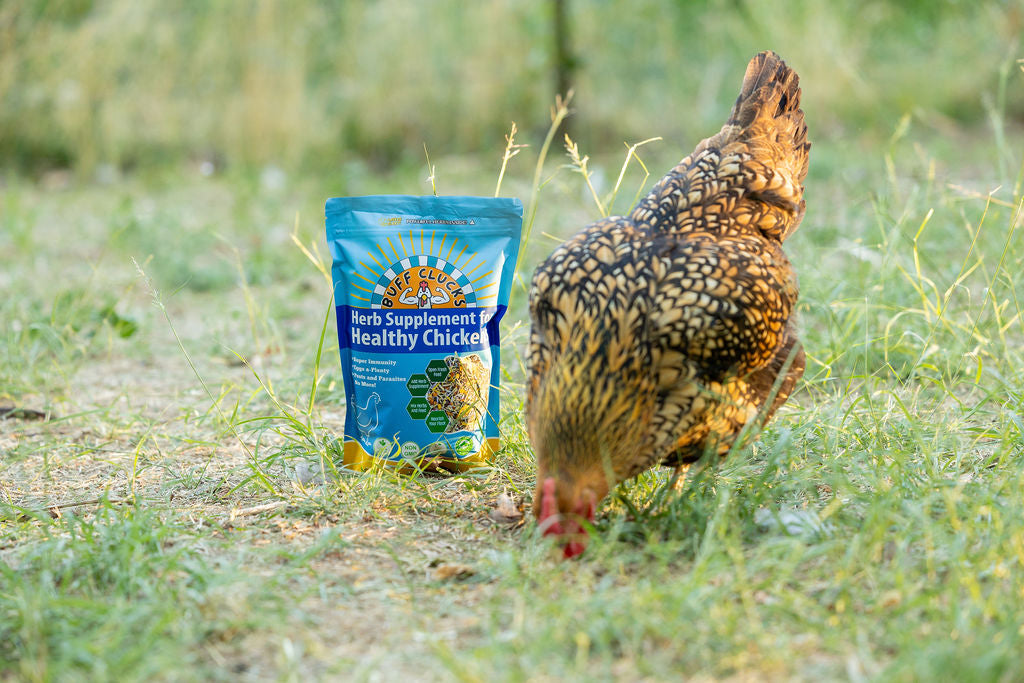
- Daily herb supplement: The Buff Clucks Herb Supplement covers Lavender (stress reduction and consistent laying), Basil (respiratory support and yolk quality), Oregano (immunity), Garlic (parasite resistance), Calendula (feather health and yolk color), Rosemary, and Red Pepper Flakes. One scoop in their feed daily. It is the simplest upgrade you can make to a flock already eating good layer feed.
- Clean, fresh water always: Dehydration directly suppresses egg production. In summer, add AquaBoost for electrolytes and probiotics to keep hens hydrated and laying through the heat.
- 14 to 16 hours of light: Use a timer with a low-wattage bulb in the coop to maintain consistent daylight hours through fall and winter.
- Low-stress environment: Stable flock, secure predator protection, adequate space, consistent routine. Chickens are creatures of habit. Disruption suppresses laying.
The National Egg Day Laying Support Stack
What actually moves the needle on consistent weekly production:
- Herb Supplement daily in feed: Lavender + Basil for stress and laying, Oregano + Garlic for immunity and parasite resistance
- AquaBoost in waterer: electrolytes + probiotics, especially through summer heat
- Oyster shell on the side, always available
Frequently Asked Questions: How Many Eggs Does a Chicken Lay Per Week?
How many eggs does a chicken lay per week?
It depends on the breed. High-production hybrids like ISA Browns and Golden Comets lay 5 to 7 eggs per week. Heritage breeds like Rhode Island Reds and Plymouth Rocks average 4 to 5. Ornamental breeds like Silkies lay 2 to 3. All hens lay fewer eggs in winter and as they age.
How many eggs does a hen lay per day?
A hen typically lays one egg every 24 to 26 hours. This means even the highest-producing breeds physically cannot lay more than one egg per day, and most average fewer than that over a full week when rest days are factored in.
What breed of chicken lays the most eggs?
ISA Browns consistently top the charts at 300 to 350 eggs per year, or roughly 6 to 7 per week in peak production. Leghorns and Golden Comets are close behind at 280 to 320 per year. Among heritage breeds, Australorps hold the all-time record: one hen laid 364 eggs in 365 days.
How many eggs does a Rhode Island Red lay per week?
Rhode Island Reds typically lay 4 to 6 eggs per week, or 200 to 300 per year. They are consistent through the seasons and hold up better in cold weather than some production hybrids.
How many eggs does a Leghorn lay per week?
Leghorns lay 5 to 6 eggs per week, averaging 280 to 320 white eggs per year. They are among the most efficient layers but tend to be flighty and less friendly than dual-purpose breeds.
How many eggs does an Australorp lay per week?
Australorps lay 4 to 6 eggs per week, around 250 to 300 per year. They hold the world record: one hen laid 364 eggs in 365 days. They are also known for calm temperaments and cold hardiness.
Why did my hen stop laying eggs?
The most common reasons are molting, reduced daylight hours in winter, stress from flock changes or predators, age, illness or internal parasites, and nutritional deficiency. Most cases resolve with time, supplemental lighting, and a good daily nutritional routine.
Do chickens lay eggs every day?
Not every day. Even top-producing breeds take rest days. A hen that lays 300 eggs per year is averaging about 5 to 6 per week, not 7. Production also slows in winter, during molt, and as hens age past their second year.
At what age do chickens lay the most eggs?
Most hens hit peak production in their first year, typically between 6 and 18 months old. Production stays strong through year 2 and then drops roughly 15 to 20 percent per year after that.
Do herbs help chickens lay more eggs?
Certain herbs support the conditions that lead to consistent laying. Lavender reduces stress, which is one of the top causes of laying slowdowns. Basil supports respiratory health and yolk quality. Oregano and Garlic support immunity so hens stay healthy enough to lay consistently. These are all in the Buff Clucks Herb Supplement.
How many eggs does a Plymouth Rock lay per week?
Barred Plymouth Rocks typically lay 4 to 5 eggs per week, around 200 to 280 per year. They are reliable, cold-hardy, and have calm temperaments, making them a popular dual-purpose breed for backyard flocks.
How many eggs does a Silkie lay per week?
Silkies lay about 2 to 3 eggs per week, roughly 100 to 120 per year. They are popular for their temperament and as broody hens, but not as primary egg producers.
Does the color of the egg depend on the breed?
Yes. Egg color is determined by breed genetics, not diet. Leghorns lay white eggs. Rhode Island Reds, ISA Browns, and Australorps lay brown. Ameraucanas lay blue. Easter Eggers lay a range including green, blue, and pink. Marans lay very dark chocolate brown eggs.
How long do chickens keep laying eggs?
Most hens lay productively through years 1 to 3, with production dropping each year after that. Production hybrids slow more sharply after year 2. Heritage breeds can continue some laying through years 5 to 6. By year 7 or 8, most hens lay rarely if at all.